Growing up, I always rooted for the heroes to win. Whether it was in a book, a movie or a TV show, I wanted good to triumph. Yes, there were villains that I liked for various different reasons, but I still wanted the good guys to win.
As I’ve gotten older however, things are not as black and white. Anymore, I find myself liking the villains of stories more and more, even to the point of rooting for them in certain aspects. I find myself empathizing with them and questioning if they really are “villains”.
It has become commonplace for villains to be turned into “misunderstood good guys”. Villains are now very much trying to justify their reasons fro being bad and in many cases, don’t see themselves as the bad guys. They think they are the good guys and that their reasons for their actions are justified. Villains aren’t bad just because they want to be bad.
But why? Why has this become more and more commonplace and what do I mean by this? Well, that is the reason this post is being written. For this, I am mainly focusing on characters in books. I have a friend who wants to do something similar and she plans on focusing more on TV shows and movies.
The one movie character I will talk about is the reason I first starting thinking about this logic. That would be the Mistress of Evil herself, Maleficent. Disney has started doing more and more live action movies based on their classics, and one of the first was a movie titled Maleficent. What at first seemed like a retelling of Sleeping Beauty, turned into much more.
The movie ended up being focused on Maleficent. Showcasing her backstory, how she was the one who raised Aurora and generally showcasing her as a good person. So I, loving Maleficent like I did, was very confused and quite angry. She’s the Mistress of Evil for crying out loud. She’s not a good person. She cursed a baby for not being invited to a party (which she still does in the movie.) It never showcased her true evil side.
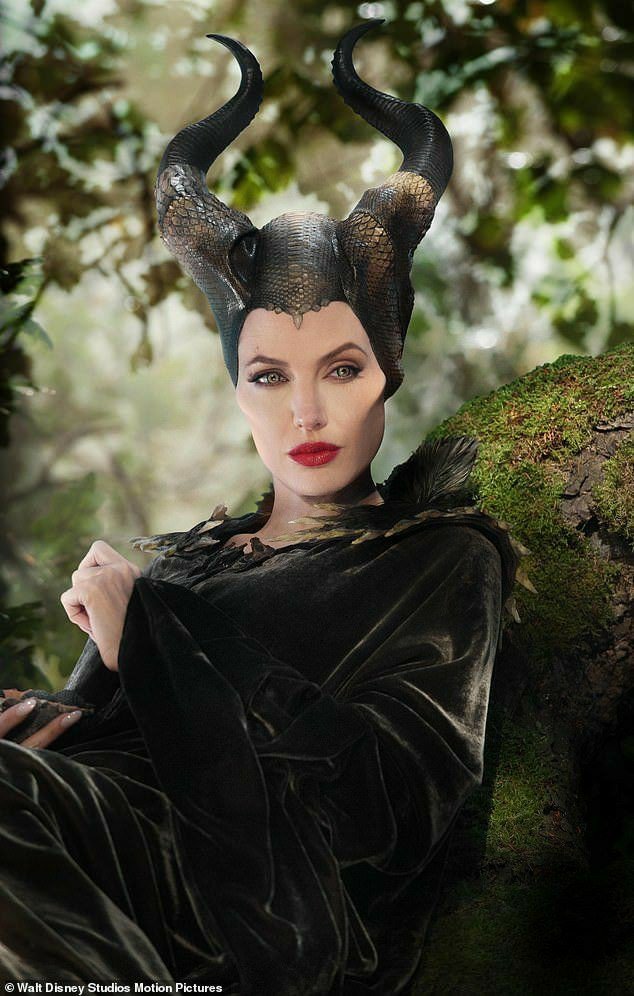
Then of course, there was a sequel. Maleficent: Mistress of Evil. Finally, this was going to be the movie that showcased Maleficent as the badass villain that she was in the original Sleeping Beauty. And boy was I wrong. Again, she ended up being a hero. I couldn’t understand the logic behind turning Disney’s greatest villain into a quasi hero. And yet, the more I thought about it, the more I began to understand the logic behind it.
Children are going to want to see the good guys wins, and no matter who wins, they’ll think they are the good guys. If they can make you empathize with a character, they won’t be a villain. Also, heroes sell toys and merchandise, at least in the eyes of Disney.
But it got me thinking. Are there more cases of this? And if there are, why are writers doing this? And sure enough, there are more examples of this kind of writing, even in my favorites series. Some big examples I picked out are Maeve from Throne of Glass, Tamlin from A Court of Thorns and Roses and Evangeline from Red Queen. At this point in proceedings, I’m gonna issue a big SPOILER WARNING. To properly talk about these characters and why they fit, I’m gonna have to talk about their stories.
Maeve is just one of the many villains in Sarah J Maas’ excellent Throne of Glass series. Although she starts off as a secondary antagonist, she quickly pivots to become one of the main characters in the series. Cunning, manipulative, smart as hell, she is what you expect out of a villain. Yet in the end, you feel bad for her and almost want her to live and start over. This is because of her story and reasoning behind what she is doing.
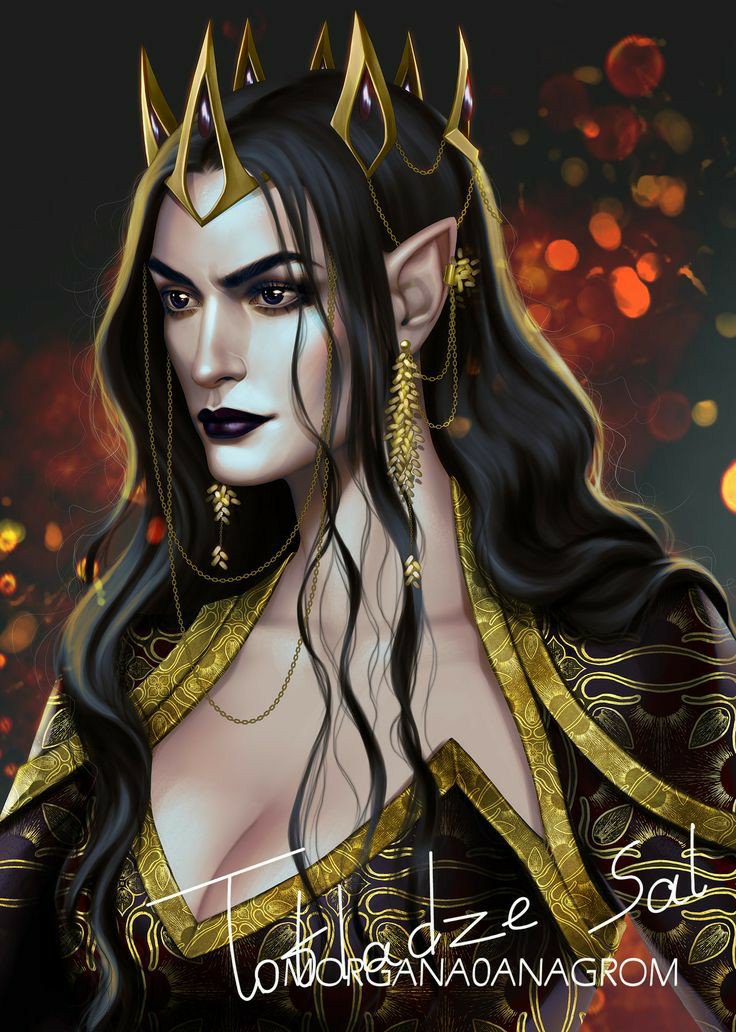
Maeve plays the victim. She escapes her husband, the Valg King Erawan and tries to start over and rule herself. Of course, Erawan and his brothers come to hunt her down. Everything she is doing is because of pure survival and a willingness to escape Erawan. Yes, Maeve some terrible things, yes they’re inexcusable. But, there is a small part of you that almost wishes she was able to survive and wonder if she would have changed if Erawan had died and she had lived.
Another Maas antagonist that many people in the fandom argue deserve a redemption story is Tamlin. This one is highly controversial and much more believable. Tamlin initially takes our protagonist Feyre back to his kingdom because he believes that she can save the land, which he is right about. But at the same time, he truly comes to care for Feyre, or at least we think so. Turns out he is one of those possessive partners that really isn’t the nicest of people. Once Feyre abandons Tamlin at the altar and is supposedly kidnapped by the “villain” Rhysand, Tamlin shows his true colors. He proceeds to do everything in his power to get Feyre back, even though Feyre and Rhys are mates. He even goes as far as allying with an enemy kingdom, hellbent on killing all of the humans, just so he can get Feyre back. But, he makes it up to Feyre by bringing back Rhysand from the dead, along with the other High Lords. But, Feyre still detests and wants nothing to do with him.
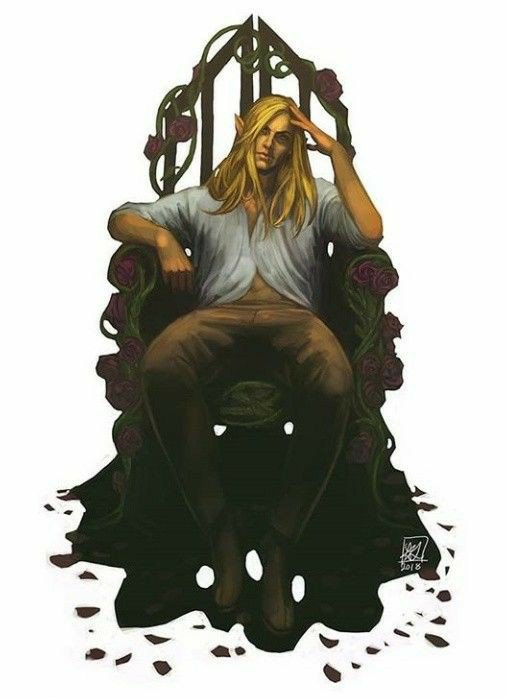
And again, he isn’t the nicest of people whatsoever. Yet, there’s a part of you that thinks he deserves a happy ending. You want him to come back and actually be happy. Despite the fact that he is nearly abusive to Feyre, got involved in a war against the humans and was willing to do some pretty terrible things. I am one of the people who don’t want a happy redemption for Tamlin. He was a pretty awful person and he should suffer as a result.
The last character I’m going to talk about is a character that really grew to become one of my favorites, Evangeline Samos from Red Queen. A sharp as knives character, with a colder personality, Evangeline is the only character on this list that got a redemption arc in a way.
Evangeline starts out as a villain. Favored to win in the arena, and a chance to marry the Crown Prince, she is instead bested and humiliated by our protagonist, Mare Barrow. So Evangeline obviously hates Mare for that, but she also hates her because of the class lines of Silvers and Reds. Now this doesn’t mean much to those who haven’t read the books, but basically the Silvers have all the power and ruling ability and special abilities. But when a Red shows signs of one, that obviously can’t be allowed.
But Evangeline’s biggest thing is that she wants to rule, but not with a man. No, she loves and wishes to marry the woman she loves, Elane. Evangeline is singularly focused on this, even as the Civil War that inevitably breaks out rages around her. She fights to preserve her family’s name, title and their new kingdom, The Rift.
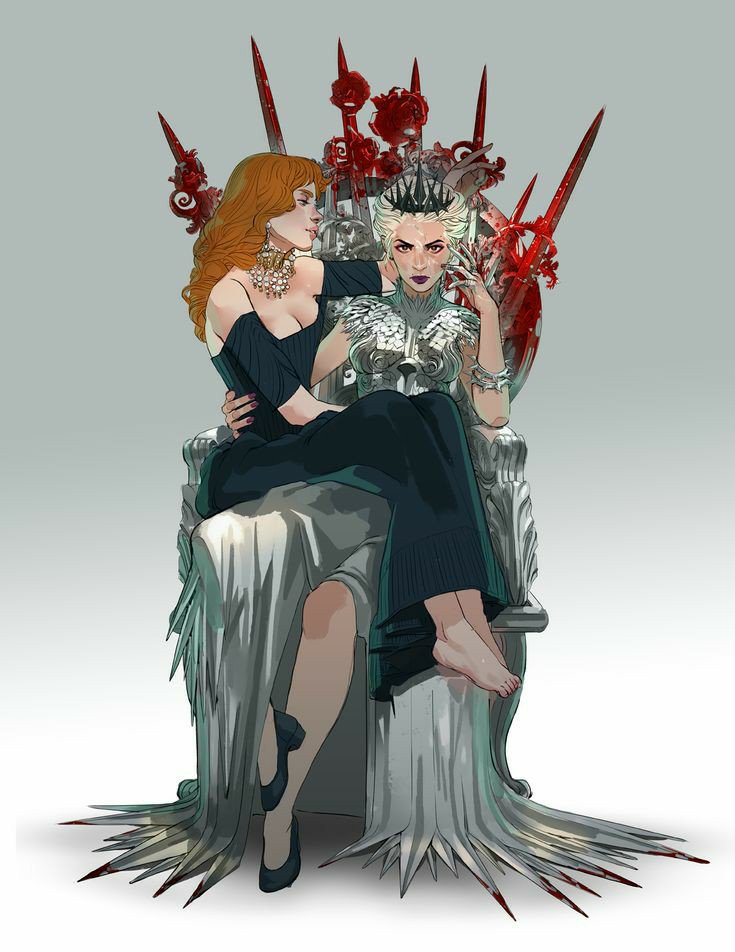
But there reaches a point in the books where Evangeline decides that fighting with her family isn’t worth it. He family is not the nicest people in the world and they will never let her have the future she wants. So, in an act of defiance, Evangeline and Elane runaway to a place where Reds and Silvers peacefully coexist.
And while Evangeline still has the attitude, she ends up becoming a quasi good person, despite her tendencies to want to drift back towards the old ways. But once she realizes that this new place can offer her the life she wants, she lays down the old life and moves forward.
So we’ve looked at examples, but we come to harder question. Why are writers creating these villains that we empathizing more with? I think there are many viable answers, and no one answer that sticks out more.
I think the biggest reason is that writers are crafting more complex characters. Writers are crafting characters, whose motivations are are a bit blurred. Gone are the days of the simple black and white, good vs evil designs. Nowadays, there is still good vs evil, but it’s not always clear at first who is who. Also gone are the villains who are bad just to be bad. They have motivations, reason and logic behind their schemes. Writers want you to be able to think about these characters and question if you are rooting for the right character.
The second reason is more controversial but I’ll try and spin it. Evil is being normalized. Yes, we still despise evil acts and look back on acts of horrific deeds as atrocious, but we aren’t as outraged by evil anymore. We let it thrive and linger in the world, as if it is a normal part of daily life. Evil won’t go away, so why try and fight it? And in books, writers are portraying that. Evil is a part of daily life and sometimes, those evil people are people that you like and care about, even if their acts disgust you.
The final reason I think that writers are writing more relatable villains is because deep down, we all believe that every person is “good”. We believe that no matter how bad a person is, deep down, there is still good in them. We think that every single person on this planet can be turned to the light. Yes, people are evil, but, they are also good. And we try our hardest to find that good in every person. It’s why even serial killers had spouses, dictators have wives.
And writers do the same things. Even villains deserve redemption arcs, despite the fact that they are some of the despicable human beings on the planet. It’s part of human nature to want to see the good in people and ignore the ugly side. I’ve been guilty of this myself on many occasions. So it’s no surprise that even in the make believe world of stories, writers use the same tactic. There is that fiber of humanity left, there is that light deep down, there is a redemption arc waiting to be found.
Now again, this is all just my opinion and we can’t say for certain why writers are making the villains the way they are. But what we do know is that writers are writing more complex characters that do away with the traditional black and white villain. In its place, is a morally grey, complex villain that makes you question whether or not you actually want them to live.
As for my opinion on the subject, it’s complicated. On one hand, I LOVE the complex characters. I think they make us think, make us questions ourselves and overall just make the book better. But every once in while, I crave a villain that is bad for no other reason then they can be. I want another old-school Maleficent. A villain who knows they’re bad, doesn’t care and loves every minute of being bad.
But I think that world is gone. I think the world of the complex villains is here to stay. And who knows. Maybe down the line, we’ll get series where the villain does win, and you’ll be cheering for them every step of the way.
 The Reader's Corner