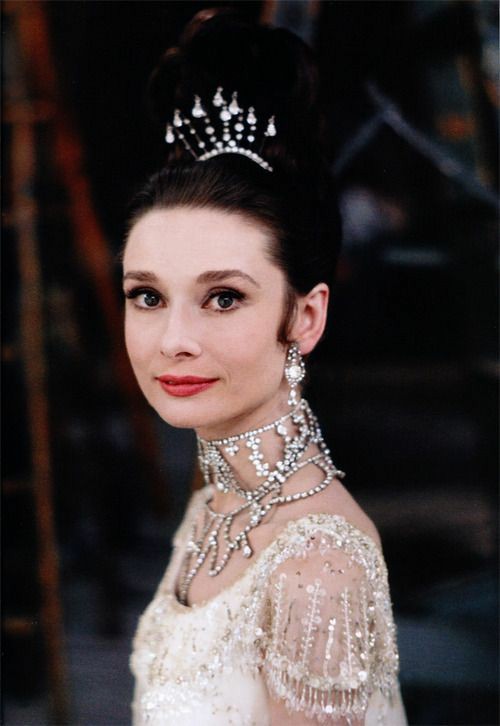
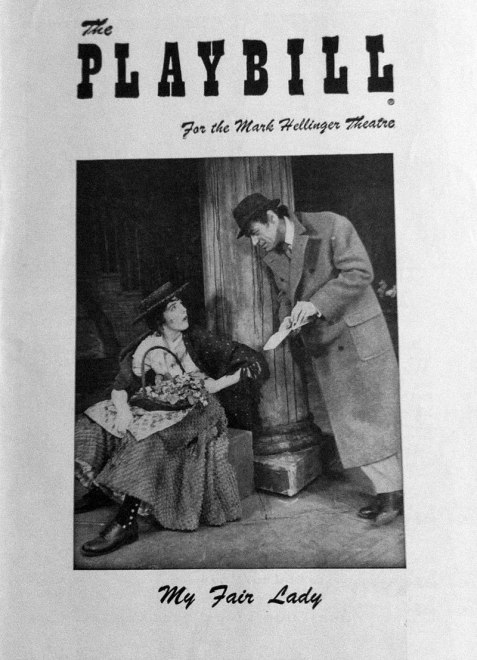
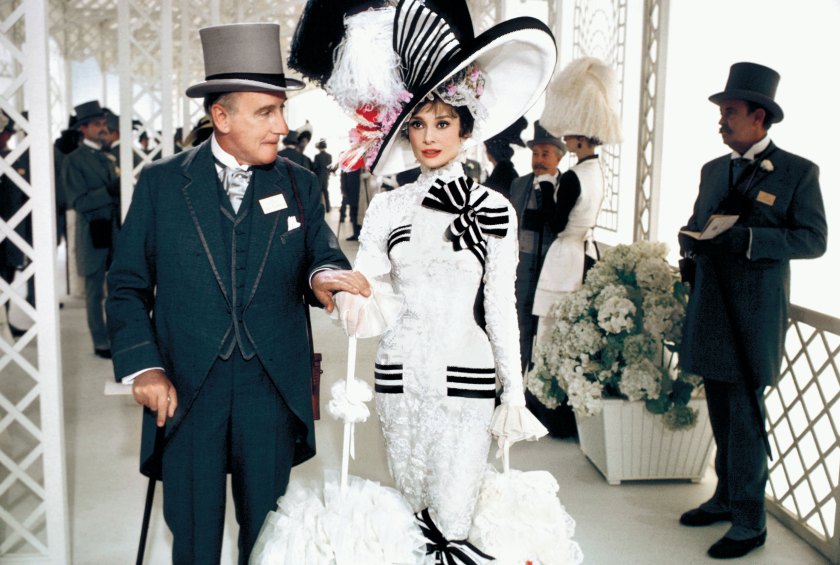
Those who know me well enough will know that I am a HUGE fan of movies. The movies are one of things that I use as an escape route. Those who know me will also know that my all-time favorite actress is the late Audrey Hepburn. It’s a weird fascination, but ever since I first saw her in the 1964 film adaptation of My Fair Lady, I have been fascinated with her. What started off as a love for her movies, turned into a love for the woman herself. Her story is an incredible one and what she did along side or in place of her movie career is amazing. Most people remember Audrey just for her looks, as she recognized as one of the most beautiful (though in my eyes, she is the MOST beautiful) actress in Hollywood history. But I remember her for other reasons.
Not only was she a phenomenal actor, but she was also a tremendous person in general. Her personality, her story, the way she treated others, she set the gold standard for what people should be like. So, on what would have been her 91st birthday, I wanted to do a sort of tribute to Audrey. Talking about her famous roles a little bit about her life and why I admire so much.
Born on May 4th 1929 in Ixelles, Belgium, Audrey’s early life was sheltered and privileged. Her parents were fairly wealthy and due to her father’s various jobs, the family traveled quite a bit. In part because of her multinational background (her mother was Dutch and her father was a British subject born in Hungary and served in the Dutch East Indies), Hepburn would go on to learn five languages. English and Dutch from her parents, but also Spanish, French and Italian.
But it was during the Second World War that Audrey’s story becomes fascinating. Her parents had officially divorced in June of 1939 and Audrey and her mother had been living in England. When Germany declared war on England, Audrey and her mother moved back to the Netherlands. The thinking was that like the First World War, the Netherlands would remain neutral, thus being spared a Nazi attack. That would not be the case, as in 1940, Germany invaded the Netherlands, beginning one of the worst occupations of the Second World War.
During this time, Audrey attended the Arnhem Conservatory and began receiving ballet lessons, under the tutelage of Winja Marova, becoming her star pupil. These ballet lessons would come in very handy during the war years.
Audrey and her family were deeply affected by the Nazi occupation. As she would recount many years later “had we known that we were going to be occupied for five years, we might have all shot ourselves. We thought it might be over next week….six months….next year…..that’s how we got through.” In addition, her uncle was was executed in retaliation for an act of sabotage by the resistance.
This prompted Audrey and her mother to stay with her grandfather in Velp. And it was at this point that Audrey began putting those ballet lessons to good use as she performed silent dance performances that raised money for the Dutch resistance. There has been much debate about Audrey’s role in the resistance effort during the war. But a recent book called Dutch Girl by Robert Maltzen (a book which I am currently reading) provided evidence of her involvement. Audrey delivered “underground concerts” to raise money, served as a deliverer for the underground newspaper and taking messages and food to downed allied airman hiding in the woods. There is story that states if Audrey was ever stopped German patrols, she would do one of her ballet dances and they would promptly send her on her way.
It really is quite extraordinary that even as a child, Audrey was willing to go out of her way to help others. Of course as the war progressed, conditions became worse and worse in the country. Day after day, Audrey watched as more Jewish citizens get loaded onto trains and taken away to concentration camps. In her own words “more than once I was at the station seeing trainloads of Jews being transported, seeing all these faces over the top of the wagon. I remember, very sharply, one little boy standing with his parents on the platform, very pale, very blond, wearing a coat that was much too big for him, and he stepped on the train. I was a child observing a child.”
With the eventual invasion of Northern France by the allies, food shortages became a real problem for Audrey and her family. Like many, they resorted to making flour out of tulip bulbs so that they could bake cakes and biscuits. Because of this, Audrey developed acute anaemia, respiratory problems and oedema as a result of malnutrition. Her family also suffered greatly financially. Their main estate in Arnhem suffered great damage because of the war.
Despite all of this, Audrey persevered. After the war, she originally wanted to continue her ballet lessons and pursue that as a potential career. But, because of her frame, her weight, and her constitution brought by the malnutrition that she had suffered, she was told that that wasn’t a possibility. So, she decided to pursue acting and as they say, the rest is history.
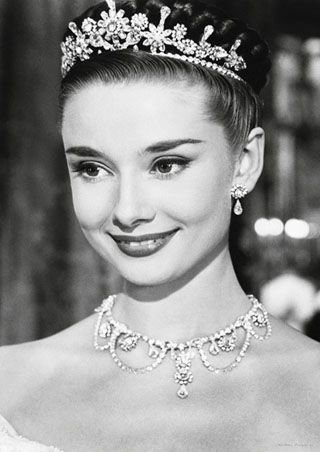
Her first staring role was the 1953 film Roman Holiday and her famous works include the 1954 film Sabrina, the 1956 adaptation of Tolstoy’s War and Peace, the 1957 film Funny Face and the two roles she is most well known for. The 1961 film Breakfast at Tiffany’s and the 1964 film My Fair Lady. She also had roles on Broadway including GiGi and Ondine. She was nominated for 5 Oscars, 5 BAFTA awards, 10 Golden Globes, 1 Tony and an Emmy among many others. She won one Academy Award, one Emmy, one Golden Globe and one Tony making her one of the few entertainers to win them all.
But is was after her acting career that, to me, Audrey once again showed her true class. Audrey retired from acting so that she could spend more time with her family, particularly, her children. But, she also served as a UNICEF Ambassador. She traveled the world, trying to bring attention to impoverished children around the world. Of a 1988 field mission to Ethiopia, Audrey said, “I have a broken heart. I feel desperate. I can’t stand the idea that two million people are in imminent danger of starving to death, many of them children, [and] not because there isn’t tons of food sitting in the northern port of Shoa. It can’t distributed. Last spring, Red Cross and UNICEF workers were ordered out of the northern provinces because of two simultaneous civil wars… I went into rebel country and saw mothers and children who had walked for ten days, even three weeks, looking for food, settling onto the desert floor into makeshift camps where they may die. Horrible. That image is too much for me. The “Third World” is a term I don’t like very much, because we’re all one world. I want people to know that the largest part of humanity is suffering.”
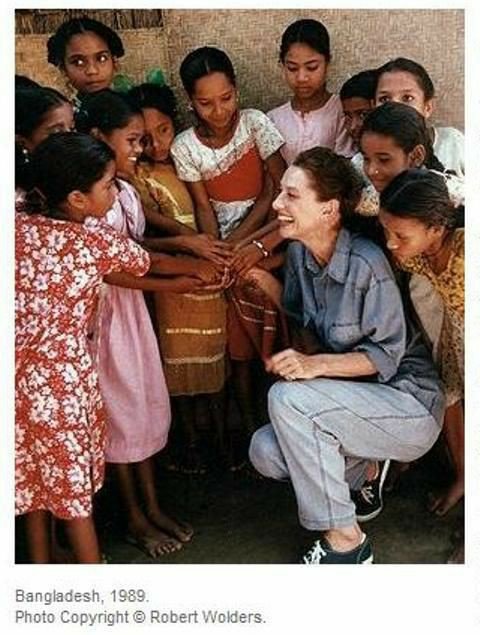
From 1988 till the end of 1992, Audrey would travel the world with UNICEF, attempting to bring to light the plight of those in need. All the while however, Audrey was battling cancer that would ultimately claim her life in early 1993. Audrey put aside her own life so that others could potentially have a better one. And that to me is what Audrey was all about. Putting aside her own life so that she could bring attention to the plight of others.
There is SOOOOOO much more about Audrey that I could talk about. He movies in general, her place as a fashion icon, but that is not what this blog post is about. This is tribute to the woman she truly was. One who was caring, graceful and a true Queen above all else. I’ll leave you with one of my favorite quotes from her. Nothing is impossible, the word itself says I’m possible!













 The Reader's Corner